
Skip to content
Go back

AlphaGo vs Lee Sedol: A Story of Human-AI Interaction

Published:  at  11:00 AM
Available Languages:

AlphaGo vs Lee Sedol: A Story of Human-AI Interaction

AlphaGo vs Lee Sedol: A Story of Human/AI Interaction

For me, it all really started at that moment. This match between AlphaGo, Google DeepMind’s program, and Lee Sedol, one of the greatest Go players in history, was a revelation. That’s when I truly opened the door, curious to understand how this AI worked — and more precisely, what was happening behind the scenes: neural networks, learning models, the “calculated” thinking of machines.

When AlphaGo faced Lee Sedol for the first time, everyone expected an easy victory for the human. Go is a game of intuition, of subtlety — something a computer cannot really “feel.”

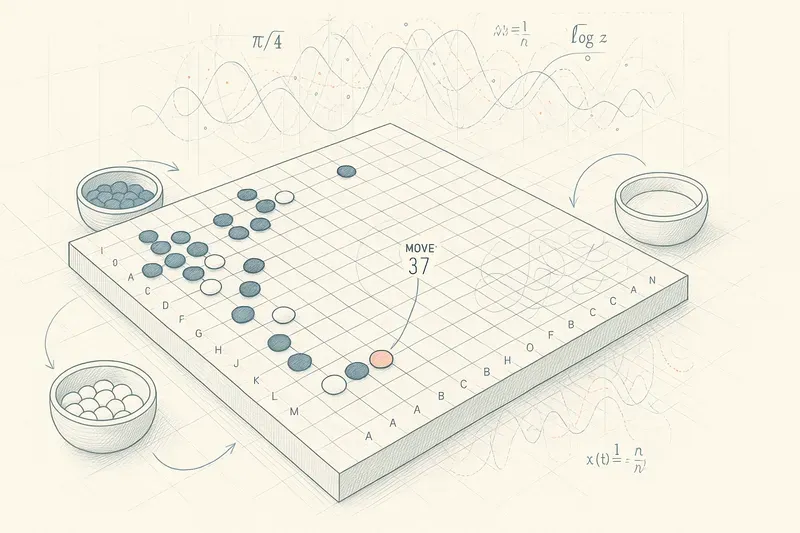
And then, AlphaGo played move 37 on the board. This move froze everyone. Lee Sedol stopped and took a fifteen-minute break, even leaving the room.

This move was unlike anything known. No human would have dared. It would have even been called a mistake if it came from a classical player. But it wasn’t one. It was a move from another world. A flash of genius from a machine, breaking the codes, shaking up the logic, and redrawing the contours of the game.

The human, on the other hand, draws his creativity from others, from his pride, and from his will to surpass himself. And despite AlphaGo’s dominance, Lee Sedol made move 78 — the “divine move,” inspired by move 37 — which allowed him to save face and show that humans can learn and adapt extremely quickly.

The role that AI will play in tomorrow’s society remains unclear and raises many questions. However, on a personal level, we can remember from AI its ability to challenge us, to give us access to knowledge, and to offer us new perspectives.

Frequently Asked Questions

What happened during the AlphaGo vs Lee Sedol match?

AlphaGo, a Go-playing program developed by Google DeepMind, defeated Lee Sedol, one of the strongest professional Go players in history, in a five-game match in 2016. The match became a turning point in artificial intelligence because AlphaGo produced strategies no human player had ever used, showing that machines could master a game long considered too intuitive for computers.

Why was AlphaGo's move 37 considered so significant?

Move 37 was significant because it resembled nothing seen before in professional Go, appearing so unconventional that it would have been dismissed as a mistake from a human player. Lee Sedol paused for fifteen minutes and left the room after seeing it, recognizing that the move revealed a completely different way of thinking about the game than anything human players had developed.

What was Lee Sedol's move 78 and why did it matter?

Move 78, later nicknamed the divine move, was Lee Sedol's own inspired response during the match, partly influenced by the unconventional logic AlphaGo had shown with move 37. It mattered because it demonstrated that a human player could adapt quickly and creatively even while losing to a machine that had redefined the boundaries of the game.

What does the AlphaGo vs Lee Sedol match reveal about human-AI interaction?

The match revealed that AI can challenge human intuition, expose entirely new strategic possibilities, and still leave room for human creativity and adaptation under pressure. It marked a shift in how people understood machine intelligence, showing that AI's value lies not only in winning but in expanding what humans believe is possible within a given domain.


Previous Post
AGI - Part 1: Before Seeing the Future, Understand the Past
Next Post
Vibe Coding: Between Magic, Rituals, and AI